


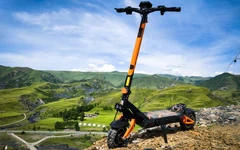


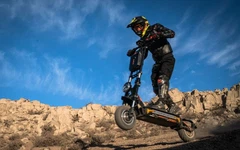


In 2026, the European two-wheel electric vehicle market is undergoing a profound transformation driven by policy, technology, and shifting consumer habits. With the gradual clarification of EU and national regulatory frameworks and the shared mobility industry entering a phase of refined operations, the market is moving from early-stage rapid growth toward consolidation and high-quality development. Against this backdrop, Chinese brands like KUKIRIN are accelerating their push into this high-growth market with high-performance products and compliance-first strategies.
Market Data: A Hundred-Billion-Dollar Blue Ocean, E-Motorcycles Lead the Way
The European two-wheel EV market demonstrates strong growth potential. According to market research data, the European e-scooter market was valued at approximately $22.68 billion in 2025** and is projected to reach **$127.33 billion by 2036, representing a compound annual growth rate (CAGR) of 16.7%. By segment, e-motorcycles held the largest market share in 2026, primarily due to their higher unit prices and growing policy support.
In terms of power output, models below 3.6kW remain the market mainstream, but the 20kW to 100kW high-performance segment is expected to register the highest growth rate, reflecting consumer demand for greater power and extended range. Lithium-ion batteries dominate the battery technology space. Regionally, Germany remains the largest market in Europe, while Hungary shows the highest growth potential.
This market growth is primarily driven by the European Green Deal, expanding urban low-emission zones, and fuel price volatility. Chinese brands have seized this opportunity with agility. Official data shows that in 2025, China exported over 26.7 million electric two-wheelers, with export value nearing $6.83 billion; in the first quarter of 2026, exports reached approximately 7.2 million units, a year-on-year increase of 68.2%. Leading brands like Yadea have overseas orders booked through October, demonstrating the strong competitiveness of Chinese manufacturing in the European market.
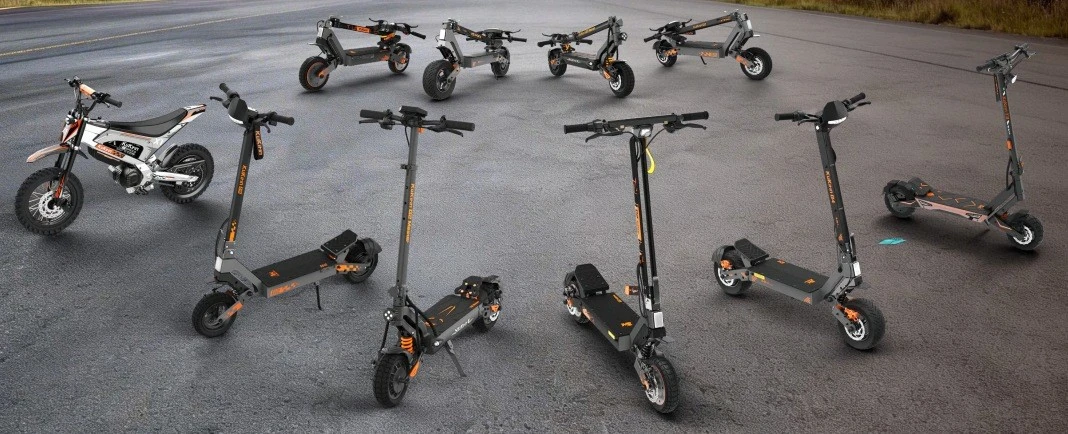
Regulatory Landscape: From Fragmentation to Order-Compliance Is the Entry Ticket
In 2026, European countries are rapidly tightening regulations on two-wheeled EVs, making compliance the foremost challenge and core competitive advantage for all market participants.
Key Policy Milestones at a Glance
European regulations remain fragmented, but requirements for identification, insurance, and registration are becoming a common trend.
|
Country/Region |
Key Policy and Effective Date |
Core Requirements |
|
Austria |
From October 1, 2026 |
"E-mopeds" require license plates, insurance, driver's license, and helmets |
|
Netherlands |
From July 1, 2025, with transition until July 1, 2026 |
Specific light EVs require license plates and registration |
|
Italy |
July 2025 Decree |
Clear EV identification; strengthened insurance and helmet requirements |
|
Portugal |
From June 20, 2025 |
Mandatory civil liability insurance for vehicles exceeding 25km/h or 25kg |
|
Spain |
From January 22, 2027 |
Only DGT-certified VMP models permitted on roads |
|
UK |
Until May 2028 |
Rental e-scooter trial extended; private scooters remain illegal; unlimited third-party liability insurance required |
In the shared mobility sector, regulatory differences among EU member states are even more pronounced, raising compliance costs for operators. For instance, France has imposed stricter insurance requirements on shared scooters, while the UK market remains severely constrained due to the unlimited third-party liability insurance requirement, which has led to very low insurer participation.
Industry Trends: Shared Mobility Enters the "Profitability Era," Innovation Drives the Future
Shared Mobility: From Growth-at-All-Costs to Profitability First
After years of fierce competition, the European shared two-wheeler EV market entered a new phase in 2026. Leading operators such as Lime and Voi have achieved EBITDA profitability for the first time, shifting the industry focus from "scale at all costs" to "efficiency first." Data shows that although the total number of shared vehicles on European streets has decreased, total trip counts have increased, indicating a significant rise in vehicle utilization. Subscription models are becoming key to enhancing user loyalty and revenue stability, while AI technology is widely applied to demand forecasting, fleet dispatch, and predictive maintenance, further improving operational efficiency.
Technological Innovation: Smart Features and Long Range Become Mainstream
Whether for individual consumers or shared fleets, smarter and longer-range products have become core competitive differentiators. "Connected mobility platforms" integrating GPS tracking, remote diagnostics, OTA updates, and app control are emerging as a new trend. In powertrain systems, high-voltage platforms and high-capacity lithium-ion batteries are becoming the mainstream choice to meet consumer expectations for range and performance. The KUKIRIN G2 ULTRA, featuring a 60V 20Ah battery, is a prime example of this technological direction.
Key Takeaways for Chinese Brands: Compliance as the Foundation, Performance as the Spearhead
In the 2026 European market, opportunities and challenges go hand in hand. For Chinese two-wheeler EV brands looking to establish a foothold, the following strategies are critical:
- Compliance is the lifeline: Thoroughly research and strictly adhere to registration, insurance, certification, and licensing requirements in each target market. KUKIRIN's proactive approach-obtaining CE certification early and adapting to the ECE R136 regulation during the R&D phase-demonstrates forward-looking compliance awareness.
- Target niche segments with precision: Demand for high-performance e-motorcycles is growing rapidly in Europe-an area where Chinese brands have clear technological advantages. Launch differentiated, high-performance products (such as the dual-motor KUKIRIN G2 ULTRA) to avoid price wars in the low-end segment.
- Embrace smart technology: Integrate smart connectivity features as standard equipment to appeal to European millennials' and Gen Z's appetite for tech-forward products, while preparing for future integration into Mobility-as-a-Service (MaaS) platforms.
- Tap into the B2B market: Beyond the consumer segment, Europe's rapidly growing e-commerce delivery economy has significant demand for high-reliability, low-maintenance two-wheeled EVs-a blue-ocean opportunity worth exploring.
Scan below whatsapp code to chat with kukirin boss